THE LOCAL NOTEBOOK
Closer to Shkodra.
A city to wander. A landscape to linger in.
The city, on foot
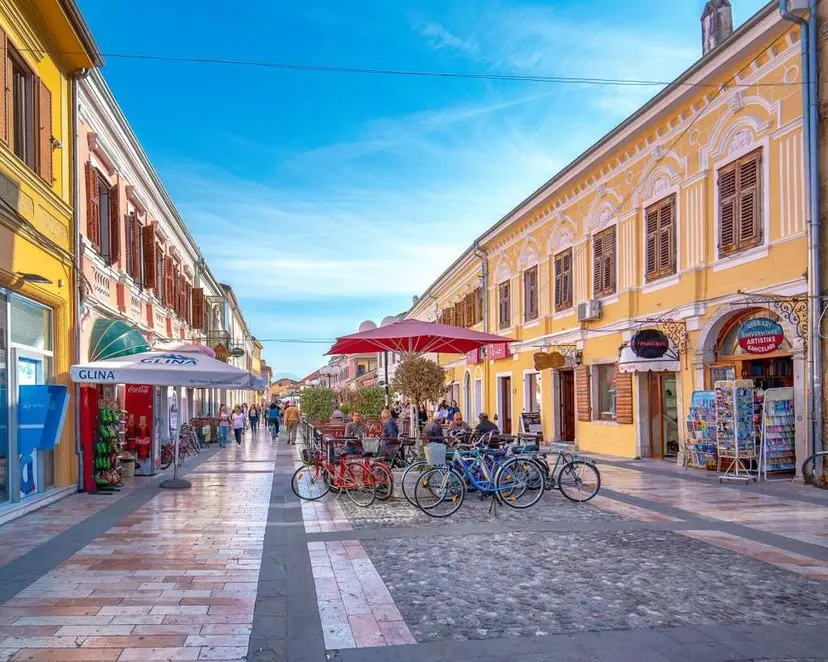
Historic Centre
Slow streets, cafe tables and a little everyday Shkodra.
Shkodra’s Historic Center is the cultural heart of one of Albania’s oldest cities, where centuries of history meet the lively rhythm of modern urban life. At its center is the pedestrian Kole Idromeno Street (Gjuhadol), lined with beautifully restored traditional buildings, colorful façades, cafés, restaurants, boutiques, and small hotels.
The area reflects Shkodra’s remarkable cultural and religious heritage. Within a short walk, visitors can discover the Cathedral of St. Stephen, the Ebu Bekr Mosque, and the Orthodox Cathedral, symbols of the religious diversity that has long characterized the city. Historic architecture, old merchant houses, narrow streets, and elegant European influences recall the period when Shkodra was an important commercial and cultural center of the Balkans.
The Historic Center is also closely connected with the city’s artistic traditions. Shkodra is considered the birthplace of Albanian photography, represented today by the Marubi National Museum of Photography, while its streets continue to be a meeting place for music, art, literature, and local life.
For visitors, it is the ideal place to slow down, walk through the pedestrian streets, enjoy a coffee or traditional meal, photograph the historic architecture, and experience the distinctive atmosphere of Shkodra.
Room to breathe
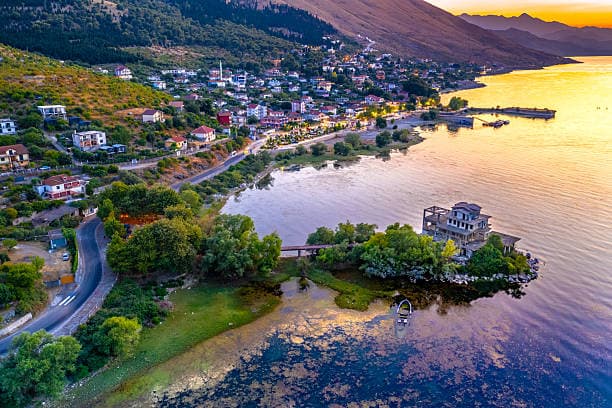
Shiroka & the lake
Take the long lunch. Stay for the light on the lake.
Shiroka is a picturesque lakeside village just outside Shkodra, set along the shores of Lake Shkodra, the largest lake in the Balkans. Surrounded by water, mountains, and Mediterranean vegetation, it is one of the city’s most relaxing and scenic destinations.
The village is known for its beautiful waterfront promenade, traditional houses, cafés, and restaurants specializing in fresh lake fish and local cuisine. From the shore, visitors can enjoy wide panoramic views across the lake toward the surrounding mountains and the border with Montenegro.
Lake Shkodra is also an important natural habitat, home to a rich variety of fish and birdlife, including the rare Dalmatian pelican. Its wetlands and calm waters make the area particularly attractive for nature lovers, photography, cycling, and peaceful walks along the lakeside.
For visitors, Shiroka offers a refreshing contrast to the historic streets of Shkodra—a place to slow down, enjoy the fresh air, taste local food, and experience the natural beauty that has shaped life around the city for centuries.
A different perspective
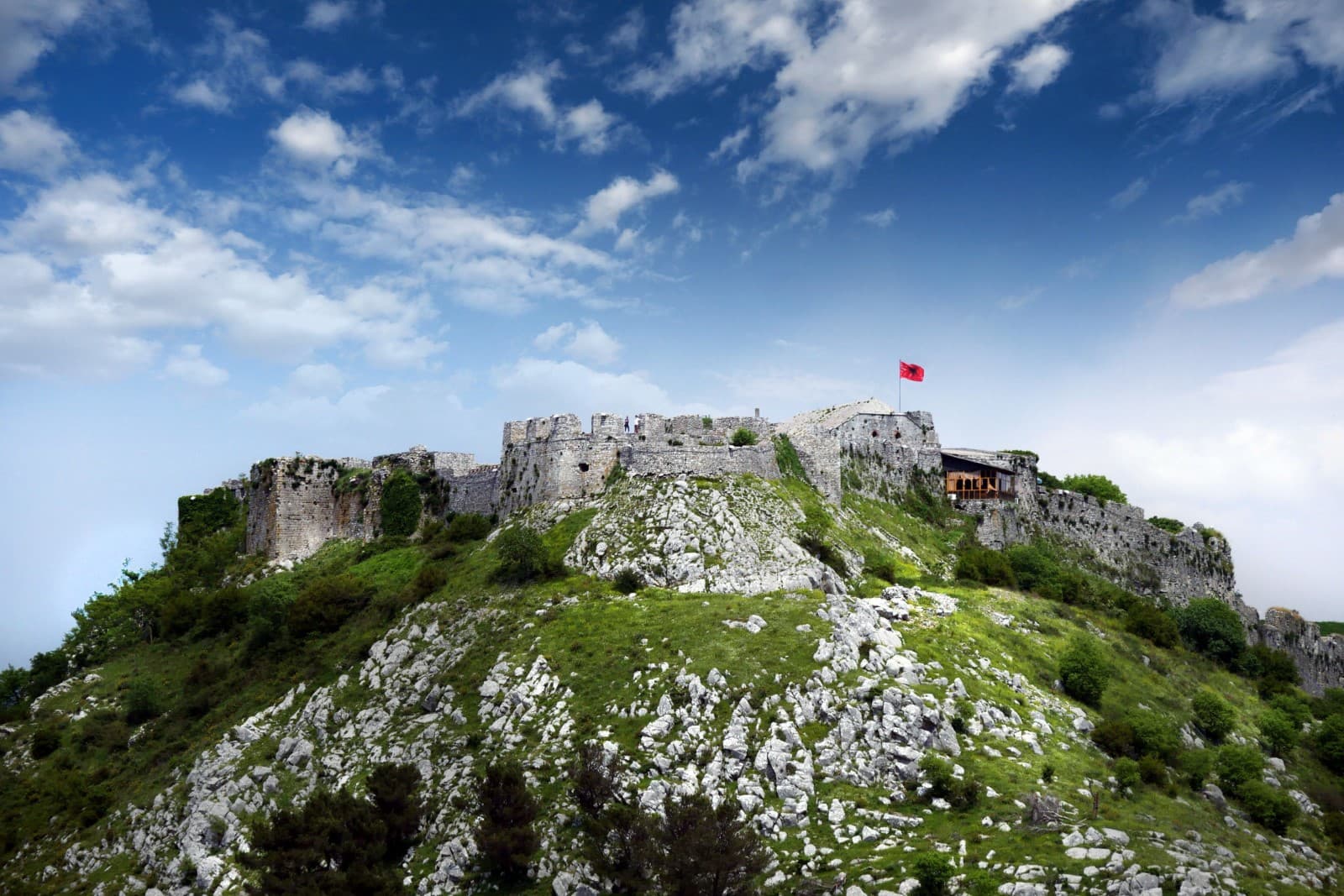
Rozafa Castle
Climb above the everyday. Let the view do the talking.
Rozafa Castle is Shkodra’s most iconic historic landmark, rising dramatically on a rocky hill above the city. From its ancient walls, visitors can enjoy spectacular panoramic views over Shkodra, Lake Shkodra, the Buna and Drin rivers, and the surrounding mountains.
The hill has been fortified since antiquity, and the castle reflects the many civilizations that have shaped Shkodra over the centuries, from the ancient Illyrians and Romans to the medieval period, the Venetians, and the Ottomans. Inside its extensive walls, visitors can explore defensive towers, courtyards, old structures, and the remains of the Church of St. Stephen, which was later converted into a mosque.
Rozafa Castle is also famous for the Legend of Rozafa, one of Albania’s best-known legends. According to the story, Rozafa was sacrificed and built into the castle walls so that the fortress could stand—a powerful tale of sacrifice, family, and endurance passed down through generations.
Today, a visit to Rozafa Castle combines history, legend, architecture, and some of the finest views in northern Albania. It is an essential stop for understanding the long history of Shkodra and its strategic importance at the crossroads between the Adriatic coast, the Balkans, and the Albanian Alps.
Beyond the city
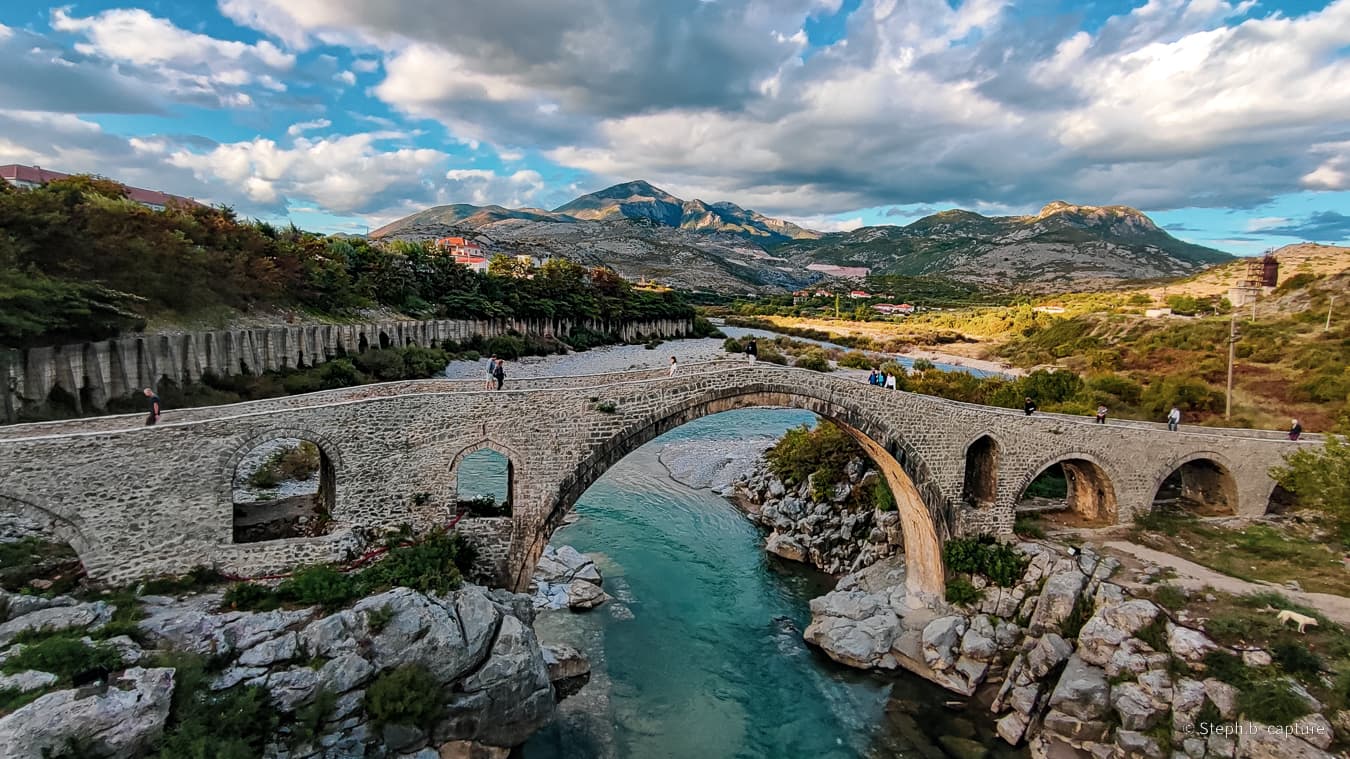
Mesi Bridge
Old stone, open skies and a reason to take your time.
Mesi Bridge is one of the most beautiful and best-preserved historic bridges in Albania, located just outside Shkodra over the Kir River. With its elegant stone arches and mountain backdrop, it is a remarkable example of traditional Ottoman-era engineering and one of the region’s most photographed landmarks.
Built in the 18th century, the bridge once formed part of an important route connecting Shkodra with the villages of the surrounding highlands. Constructed entirely from stone, it stretches across the river with a series of arches of different sizes, creating its distinctive curved profile.
The surrounding landscape is an essential part of the experience. The clear waters of the Kir River, rocky riverbanks, green hills, and nearby mountains create a peaceful natural setting that changes beautifully throughout the seasons.
Today, Mesi Bridge offers visitors a combination of history, architecture, and nature. It is an ideal place for a short walk, photography, and enjoying the scenery while discovering an important reminder of the historic routes that once connected Shkodra with the Albanian highlands.
Start/Stop
Stop 1 - Start/Stop
Start and finish your Sightseeing Shkodra journey at this stop.